Originally written in 2019 and updated for 2025 by the author.
Introduction
With over a decade of hands-on experience in containerisation, from the early Docker betas to managing production workloads on Kubernetes at scale, I have seen firsthand how containers have evolved from a developer novelty into a foundational enterprise technology.
In 2025, containers are no longer a nice-to-have. They are essential. They enable the agility, portability, and scalability modern applications require. And as businesses migrate to the cloud, containers are often the bridge between legacy systems and modern cloud-native architectures.
This blog draws from years of field experience helping organisations adopt containerisation successfully, and more recently, guiding clients in leveraging Azure Kubernetes Service (AKS) and Azure Container Apps for cloud-native transformations.
What Exactly Are Containers?
Most people think of Docker when they hear “containers,” while others picture shipping containers. The comparison is intentional. Shipping containers revolutionised global logistics with a standard, portable unit for moving goods across oceans, rails, and trucks. In tech, containers did something similar. They created a standardised, portable environment for running software across dev, test, and production.
They solve the “it works on my machine” problem by packaging the application code, its dependencies, and its runtime configuration into a consistent unit. Whether you are running it on your laptop, a data centre VM, or in the cloud, the container behaves exactly the same.
Virtual Machines vs. Containers
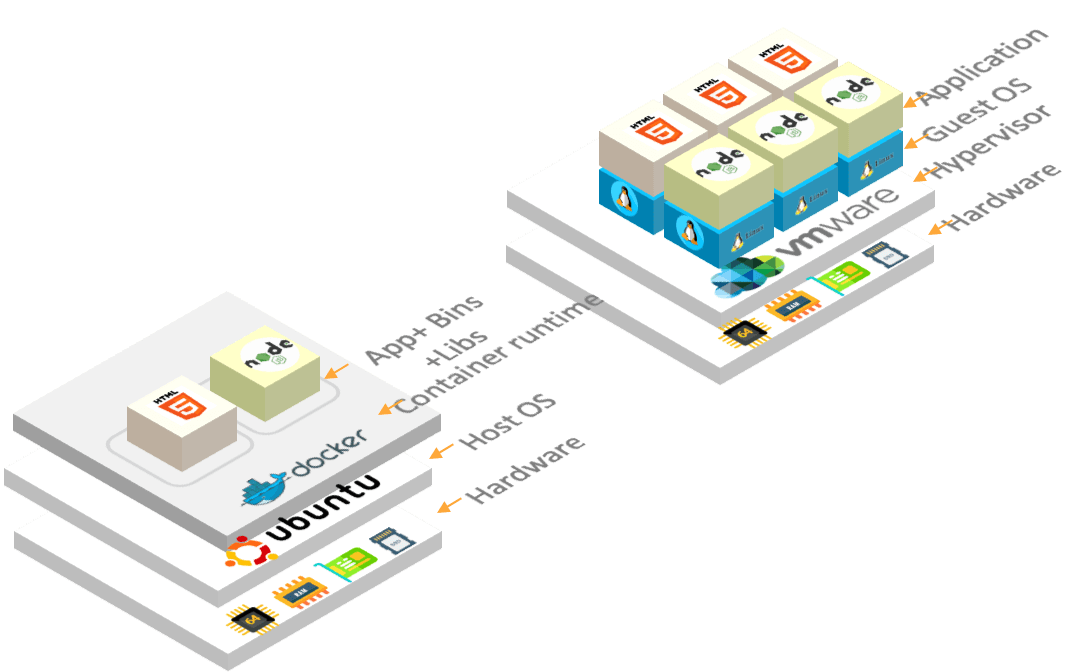
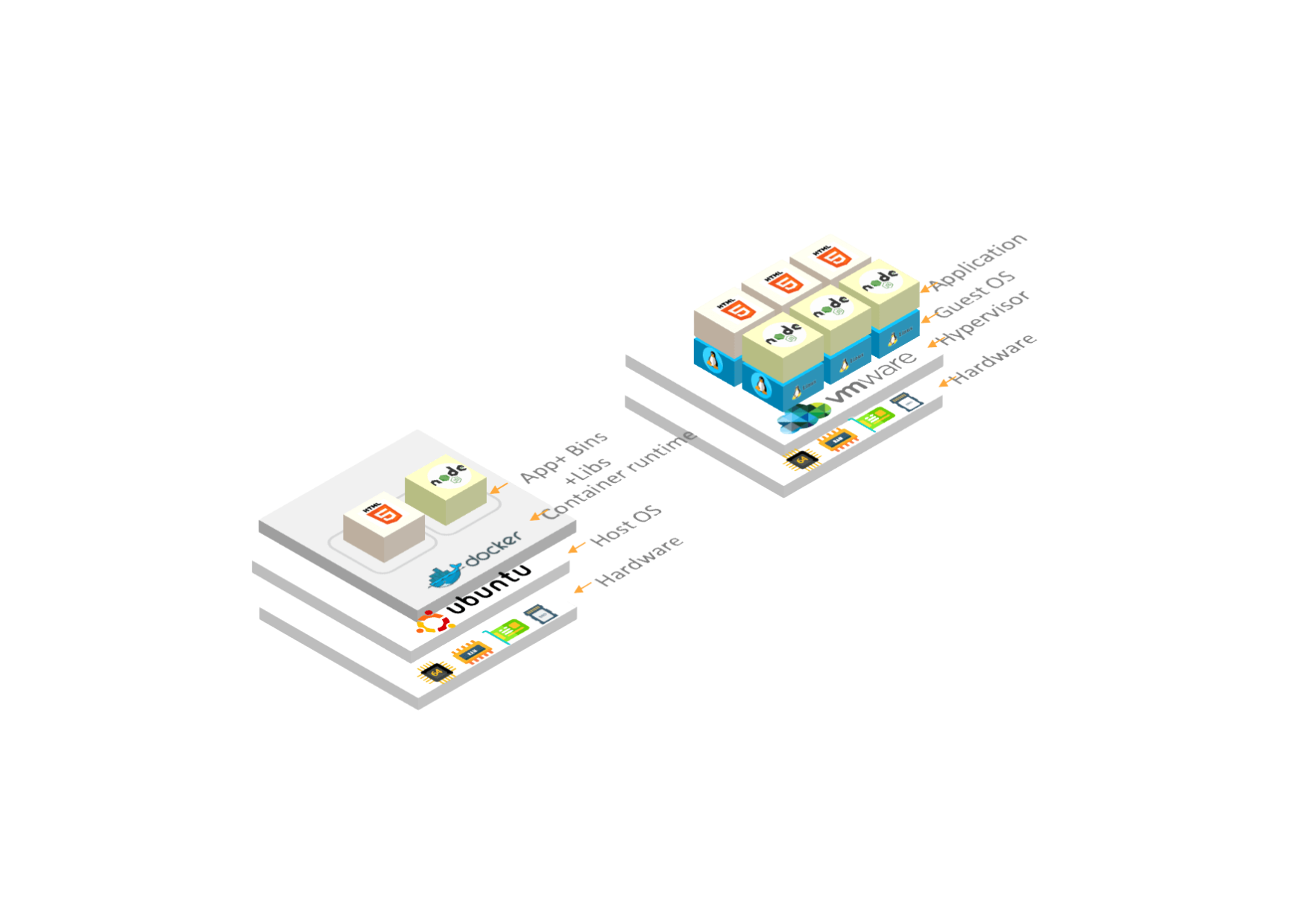
Before containers, virtualisation was king. Virtual Machines (VMs) abstract hardware to allow multiple OS instances on a single server. Defined by Popek and Goldberg as “efficient, isolated duplicates of real machines,” VMs allowed better hardware utilisation, but came with heavy resource overhead.
System VMs emulate full operating systems, with their own kernels, memory, and virtualised hardware. That makes them secure but slow to start and resource-heavy.
In contrast, containers virtualise at the OS level, not the hardware. Instead of spinning up an entire OS, containers share the host kernel but isolate the user-space processes. This makes containers:
- Faster to start (seconds instead of minutes)
- Lighter on memory and CPU
- Easier to scale
The Kernel Magic Behind Containers: Namespaces and Cgroups
Linux containers rely on two fundamental features:
- Namespaces. Isolate what a process can see: filesystem (mnt), processes (pid), networking (net), hostnames (uts), users (user), and more.
- Cgroups. Control what a process can use: CPU, memory, disk I/O, and more.
Together, they allow containers to appear like independent systems while using shared OS resources. These primitives make modern container runtimes like Docker possible.
From LXC to Docker to OCI
In the early days, Docker used LXC to create containers, relying on external Linux tools. But LXC was limited to Linux and not ideal for long-term innovation.
Docker eventually created libcontainer, its own runtime library, allowing cross-platform support and tighter control. Over time, the Docker engine was modularised into:
- runc. Implements the OCI container runtime spec.
- containerd. Manages lifecycle and image operations.
- Shims. Enable daemon-less container operations.
This modular shift allowed a richer ecosystem to emerge, supported by the Open Container Initiative (OCI), an industry-standard for image and runtime formats.
Quick Comparison: Containers vs. VMs
| Feature | Virtual Machines | Containers |
|---|---|---|
| Virtualisation | Hardware-level | OS-level |
| Startup Time | Minutes | Seconds or less |
| Resource Usage | High (includes OS) | Low (shares host OS kernel) |
| Portability | Moderate | High |
| Packaging Unit | App + OS | App + Dependencies |
| Use Case | Legacy apps, multi-OS support | Microservices, cloud-native workloads |
Real-World Value: Why Containers Matter in 2025
From years in the trenches, here is what truly makes containers game-changing:
- Portability. Build once, run anywhere. On-prem, dev laptop, or public cloud.
- Consistency. Dev, staging, and prod environments are identical.
- Speed. Spin up services in seconds for CI/CD and ephemeral environments.
- Efficiency. Maximise resource utilisation without heavy OS overhead.
- Scalability. Orchestrators like Kubernetes make it easy to scale up and down.
- Microservices. Ideal for building and deploying independently scalable services.
In short, containers give both developers and operations teams the agility they need in today’s fast-moving landscape.
Field Experience: Transforming Clients Using Azure Containers
Over the past few years, our team has helped enterprise clients modernise their apps using containerisation and Microsoft Azure. Here is how we approach it:
- Migration to Azure Kubernetes Service (AKS). We help lift-and-shift Docker workloads to AKS, providing automation, governance, and CI/CD pipelines with GitHub Actions and Azure DevOps.
- Re-architecture with Azure Container Apps. For clients embracing serverless, we offer guidance on adopting microservices containerised workloads and running them on Azure Container Apps, enabling event-driven scaling and seamless integration with Dapr, Azure Functions, and Logic Apps.
- DevSecOps integration. We embed security from day one. Integrating Azure Defender for Containers, private container registries (ACR), and Azure Policies for compliance.
- Cost optimisation and governance. Using Azure Monitor, Azure Advisor, and resource tagging strategies, we help clients gain visibility and reduce container resource waste.
By leveraging AKS and Azure Container Apps, our clients achieve greater agility, scalability, and operational resilience, while aligning with cloud-native best practices.
Final Thoughts
Containerisation is not just a technology trend. It is a transformation. From my decade-long journey, from manually configuring chroot jails to deploying serverless containerised services at scale, containers have consistently delivered value across development, security, and infrastructure.
As we move deeper into 2025, containers are evolving further with WebAssembly, edge computing, and AI workloads now being containerised too.
Whether you are a developer starting out or a cloud architect modernising legacy systems, understanding containers is essential to staying competitive.
And remember: the container you build today may very well be the foundation of the platform you scale tomorrow.
Originally written in 2019 and updated for 2025 by the author.
With deep experience in containerisation and a current focus on Azure Cloud, we help clients modernise, migrate, and re-architect their workloads using Azure Kubernetes Service and Azure Container Apps.